
Can You Live in a House With Mold? What to Know First
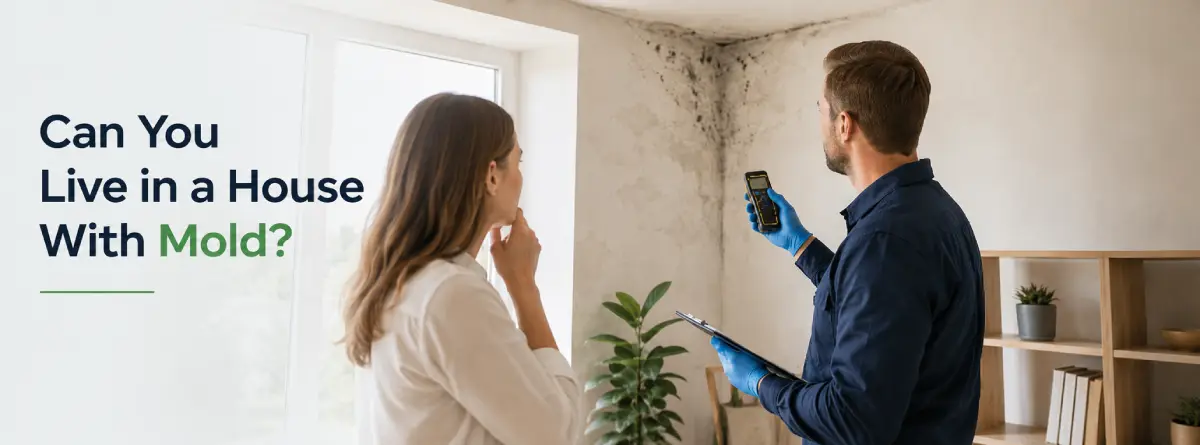
Can You Live in a House With Mold?
Quick Answer: You may be able to stay in a house with a small, isolated mold issue for a short time, but you should not ignore it. Mold usually indicates a moisture problem, and the safest next step is to identify the source, assess the extent of the growth, and decide whether inspection, testing, or remediation is needed.
Mold in a home can be stressful because it raises two questions at once: is the air inside the house healthy, and what is causing the mold to grow? In South Carolina, where moisture, humidity, roof leaks, crawlspace issues, and plumbing problems can all contribute to indoor mold, the answer depends on how much mold is present, where it is located, who lives in the home, and whether the moisture problem is still active. If you see mold, smell a musty odor, or suspect hidden growth, a professional mold inspection can help you understand what is happening before the problem spreads.
Living With Mold Depends on the Size and Source
A small patch of mold around a window, bathroom vent, or minor condensation area is different from widespread mold inside walls, flooring, ceilings, HVAC areas, or a crawlspace. The biggest concern is not just the visible mold. It is the moisture source feeding it. Mold needs water or damp conditions to grow, so cleaning the surface without addressing the moisture problem often leads to the issue recurring. If the affected area is growing, smells musty, or keeps coming back after cleaning, the home needs a closer look.
Who Lives in the Home Matters
Some people are more sensitive to damp or moldy environments than others. People with asthma, allergies, chronic respiratory conditions, weakened immune systems, young children, and older adults may react more strongly to mold exposure. Compliance Centre does not diagnose health symptoms, but if people in the home are experiencing ongoing irritation, breathing discomfort, or symptoms that seem worse indoors, it is reasonable to treat the mold concern seriously and speak with a medical professional when needed.
When Mold Testing Makes Sense
Not every mold situation requires the same approach. In some cases, visible growth and moisture damage are enough to justify remediation planning. In other cases, mold testing services can help document indoor air concerns, compare indoor and outdoor conditions, or support decisions for real estate, rental property, commercial buildings, or post-remediation verification. Testing is especially useful when mold is suspected but not clearly visible, when odors persist, or when documentation is needed before or after corrective work.
Can You Sleep in a Room With Mold?
Sleeping in a room with active mold growth is not ideal, especially if the mold is near the bed, in the HVAC path, behind a wall, around a window, or connected to a leak. People spend several hours in a bedroom each night, so indoor air conditions matter. If the mold is visible, musty odors are strong, or symptoms seem worse after sleeping in that room, it is smart to use another room when practical and have the area inspected. The goal is not to panic, but to reduce exposure while the source is identified and corrected.
Why This Matters
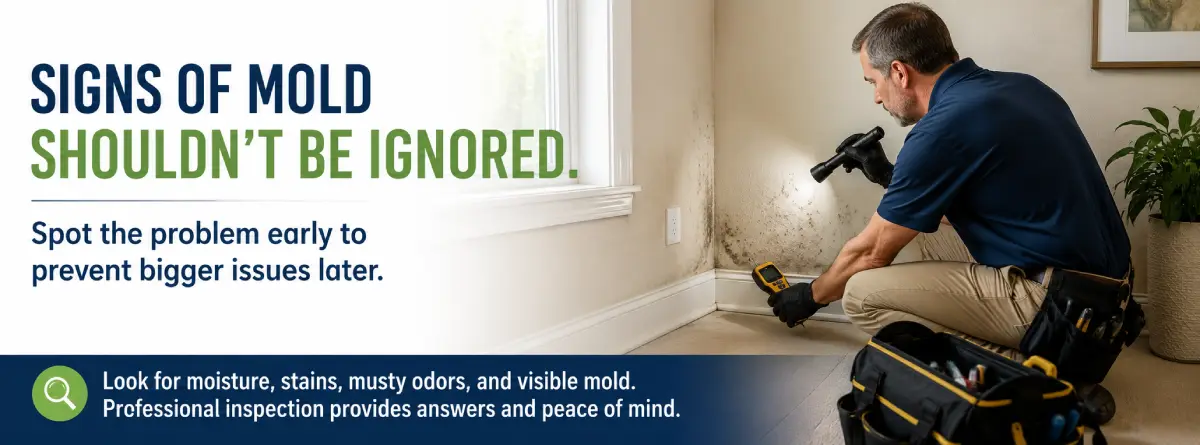
Mold is usually a building condition problem before it becomes a cleanup problem. If moisture is still entering the home, the issue may persist behind walls, under flooring, inside cabinets, or in crawl spaces. Proper inspection helps connect the visible signs with the cause, whether that is a plumbing leak, roof leak, poor ventilation, drainage problem, condensation, or storm-related water intrusion.
Common Mistakes
- Painting over mold without correcting the moisture source.
- Assuming a musty odor is harmless because no mold is visible.
- Running fans across a contaminated area before understanding the extent of the problem.
- Removing damaged materials without considering whether professional containment or documentation is needed.
- Waiting until a small moisture issue spreads into a larger indoor air quality concern.
Best Practices
- Find and correct the water source before focusing only on surface cleanup.
- Document visible mold, staining, odor, and moisture history before repairs begin.
- Use inspection or testing when mold is hidden, recurring, widespread, or tied to a real estate or rental concern.
- Keep indoor humidity under control with ventilation, drainage, and moisture management.
- Consider mold remediation services when the affected area is larger, recurring, or connected to water-damaged building materials.
Local Relevance
Homes and buildings in South Carolina can face moisture challenges from humidity, crawlspaces, heavy rain, roof leaks, plumbing issues, and older construction materials. In areas such as Columbia, Orangeburg, and surrounding communities, mold concerns often appear after water intrusion, HVAC condensation, poor ventilation, or long-term dampness. A local environmental consultant can help identify whether the issue is isolated or part of a larger building moisture problem.
When to Contact a Professional
Contact a professional if the mold covers a large area, keeps returning, smells strong, appears after water damage, affects bedrooms or HVAC areas, or may involve hidden materials. You should also seek help when occupants are sensitive to mold, when documentation is needed, or when a property sale, lease, insurance issue, or renovation is involved. Compliance Center can help with inspection, testing, and practical next-step guidance.
Final Thoughts
So, can you live in a house with mold? Sometimes temporarily, depending on the size, location, cause, and occupants, but mold should not be treated as normal or ignored. The smart approach is to identify the moisture source, understand the extent of the problem, and make decisions based on inspection, testing, and proper remediation planning. To discuss a mold concern in your home or building, contact Compliance Center for guidance before the issue becomes more expensive or disruptive.
Frequently Asked Questions
Is it safe to live in a house with mold?
It depends on the amount of mold, where it is located, whether moisture is still active, and who lives in the home. Small isolated areas may be less urgent than widespread or hidden mold, but mold should still be investigated and corrected.
Should I leave my house if I find mold?
Not always. However, if mold is widespread, odors are strong, water damage is active, or sensitive occupants are affected, it may be safer to limit use of the affected area until the problem is evaluated.
Can mold grow behind walls?
Yes. Mold can grow behind walls, under flooring, inside cabinets, around windows, in crawlspaces, or anywhere moisture is trapped. A musty odor, staining, soft materials, or recurring moisture may point to hidden growth.
Do I need mold testing if I can already see mold?
Sometimes visible mold is enough to plan corrective work, but testing can help when documentation is needed, when mold is suspected but not visible, or when indoor air quality concerns need more information.
Who should I call for mold concerns in South Carolina?
For mold concerns in South Carolina homes or buildings, contact an environmental inspection and testing professional who can evaluate moisture conditions, visible growth, possible hidden mold, and appropriate next steps.