
Does Homeowners Insurance Pay for Black Mold Remediation?
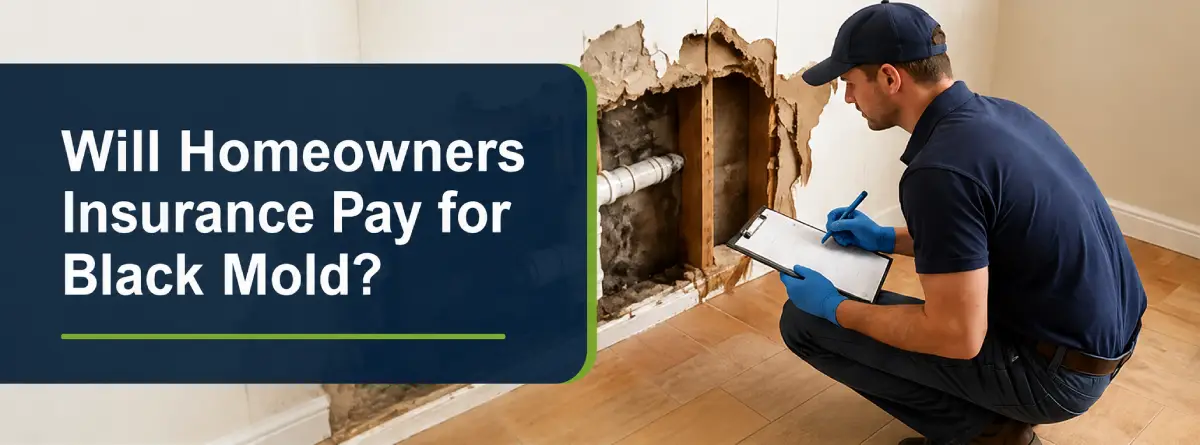
Can Homeowners Insurance Cover Black Mold Remediation?
Quick Answer: Homeowners insurance may pay for black mold remediation when the mold can be traced to a sudden, accidental event covered by the policy—for example, a burst pipe or an appliance that unexpectedly leaks may qualify. Mold caused by months of moisture, neglected repairs, ongoing humidity, flooding, or another excluded event is less likely to be covered.
Finding dark mold inside your home is concerning enough. Then comes the question of who will pay to deal with it. Before assuming your insurance company will approve or deny the claim, try to determine where the moisture came from, review the limits and exclusions in your policy, and photograph the affected area. A professional mold inspection can help identify visible damage, possible hidden growth, and moisture conditions that may not be obvious at first glance.
The Cause of the Mold Often Determines Coverage
Insurance adjusters usually want to know what happened before the mold appeared. The mold itself is only part of the claim. If a plumbing line breaks without warning and releases water into a wall, for example, the resulting damage may fall under a covered water-loss event. Depending on the policy, coverage could extend to damaged building materials, water removal, and related mold remediation.
That does not mean every expenditure will automatically be paid. The deductible, policy exclusions, mold limitations, and any added endorsements will impact the outcome. One policy may provide limited mold coverage following a covered leak, while another may exclude most mold-related costs.
Insurance Claims are more likely to run into problems when the moisture developed gradually. A roof that has leaked for several months, a small plumbing leak that was never repaired, recurring HVAC condensation, poor ventilation, or long-term crawlspace dampness may be treated as maintenance or deterioration rather than a sudden loss.
Many Policies Limit Mold Coverage
There is no single mold provision used by every insurance company. Some homeowners policies contain broad mold exclusions. Others allow limited coverage when mold results directly from another covered event. Homeowners may also have the option of purchasing an endorsement that changes the amount or type of mold protection provided.
When reviewing a policy, look beyond the general water-damage section. Provisions involving fungi, wet rot, bacteria, seepage, leakage, flooding, and repeated moisture may all affect the claim. An insurance agent or adjuster should be able to explain how those provisions apply to the loss being reported.
The South Carolina Department of Insurance also reminds homeowners that standard homeowners insurance generally does not cover flood damage. Its information about mold, moisture, and insurance considerations offers useful background, but the wording of the homeowner’s individual policy will ultimately matter most.
Dark-Colored Mold Is Not Necessarily One Species
People often use the phrase “black mold” to describe any mold that looks black, gray, or dark green. Appearance alone, however, does not identify the species. Several types of mold can grow in the same damp area, and their color may change depending on the surface, moisture level, and stage of growth.
A mold inspection looks at the overall conditions in the home, including visible growth, water entry, damp materials, and areas where moisture may be trapped. Mold testing services may also be useful when sampling can answer a specific question, document conditions, or help evaluate an area where the source is unclear.
Testing is not automatically necessary in every situation. Its value depends on what the homeowner, inspector, remediation contractor, or insurance company needs to determine.
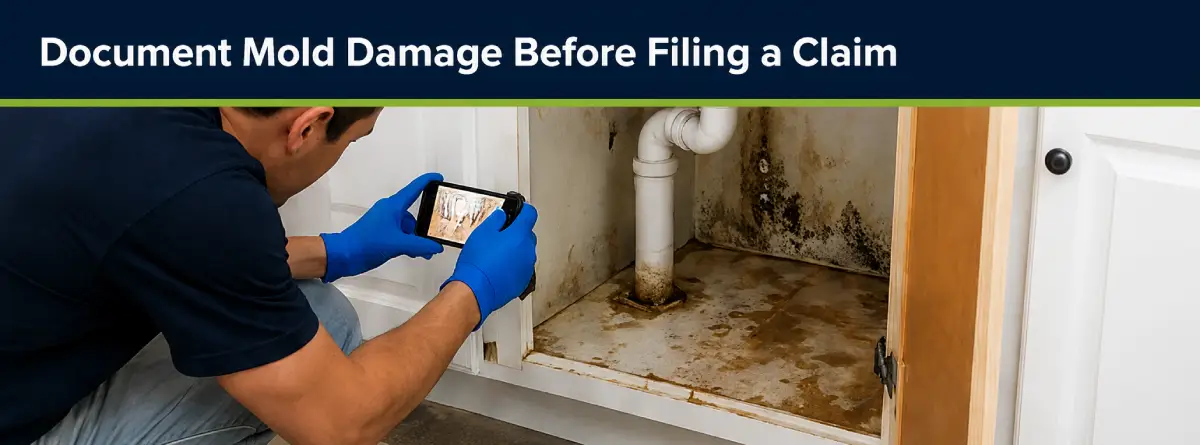
Document the Damage Before Filing a Claim
Good records do not guarantee that an insurance company will approve a mold claim. They do, however, make it easier to show when the damage was discovered, what caused it, and what the homeowner did afterward.
Contact the insurance company as soon as reasonably possible and ask what it wants documented. Unless urgent action is needed to prevent more damage, avoid removing large sections of drywall, flooring, cabinets, or insulation before the insurer has had an opportunity to review the conditions.
- Take clear photographs and videos of any water source, damaged materials, and visual mold.
- Take note when the leak, overflow, or other event appeared and when the damage was first seen.
- Save invoices from plumbers, roofers, appliance technicians, and emergency water-removal companies.
- Keep inspection reports, moisture readings, sampling results, and remediation proposals together.
- Make notes about conversations with the insurance company, adjuster, and contractors.
- Ask whether an inspection is required before damaged materials are removed.
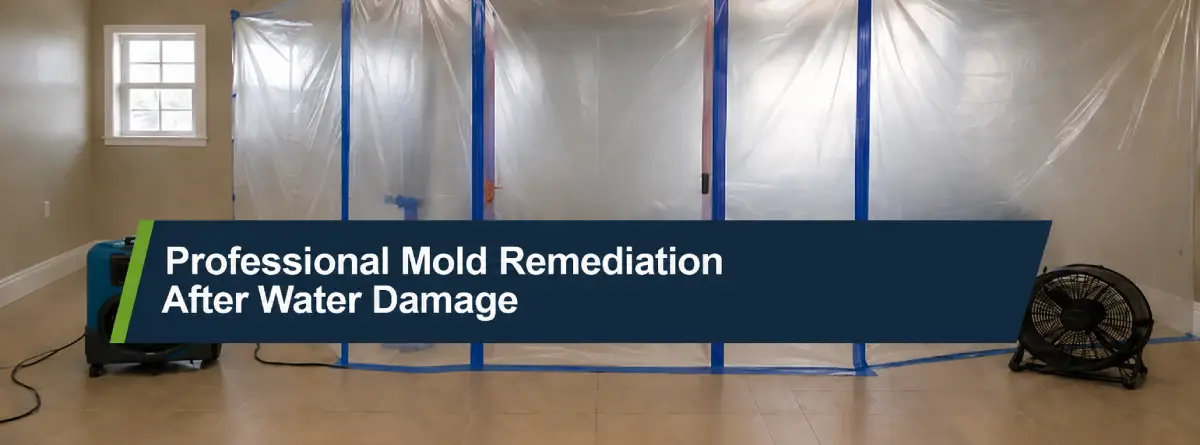
Inspection, Testing, and Remediation Are Not the Same
These services are related, but each serves a different purpose. A mold inspection evaluates the property for visible growth, water intrusion, and moisture conditions. Testing involves collecting selected air, surface, or material samples when those samples are expected to provide useful information.
Remediation focuses on dealing with affected materials while limiting the spread of dust and spores into other parts of the property. It should also address the reason the mold developed. Removing damaged drywall without correcting the leak or humidity problem leaves the home vulnerable to the same issue returning.
An insurance company may handle each portion of the loss differently. Emergency water removal, plumbing repairs, drywall replacement, mold remediation, damaged personal belongings, and temporary housing may be reviewed as separate expenses. Ask the insurer to explain in writing which parts of the claim are approved, limited, or excluded.
Why Clear Documentation Matters
A claim is easier to understand when the damage can be tied to a distinguishing event. Dated photographs, repair invoices, moisture readings, and a clear timeline give the insurer more information to work with. They may also help distinguish a recent plumbing failure from a moisture problem that has existed for months.
Waiting too long, throwing away damaged materials without documentation, or beginning major demolition before the area is evaluated can make the cause and extent of the problem harder to establish.
Common Mistakes Homeowners Make
- Assuming that every mold problem is covered or that every mold claim will be denied.
- Painting over visible growth before the moisture source has been identified.
- Removing extensive damaged materials without first photographing the area.
- Waiting several days or weeks to report a sudden plumbing failure.
- Calling mold the original cause when the actual cause was a leak, overflow, storm, or moisture problem.
- Beginning remediation without correcting the water source.
Practical Steps to Take
- Stop the water source when it is safe to do so.
- Take reasonable steps to keep the damage from spreading.
- Notify the insurance company and ask what documentation it requires.
- Keep photographs, invoices, reports, estimates, and claim correspondence in one place.
- Bring in qualified professionals when the damage is extensive, hidden, recurring, or connected to a significant water event.
- Make sure any remediation plan addresses both the affected materials and the underlying moisture problem.
Mold and Moisture in South Carolina Homes
Homes throughout South Carolina deal with conditions that can encourage indoor moisture. High humidity, heavy rain, plumbing leaks, roof damage, HVAC condensation, and damp crawlspaces are all common concerns. Properties in Columbia, Orangeburg, and nearby communities may also experience water intrusion during severe storms.
Managing recurring condensation, indoor humidity, and crawlspace moisture is an important part of mold control and prevention. Cleaning or replacing damaged material will not solve the problem for long if moisture continues to enter the same area.
It is also important to describe water damage accurately when reporting a claim. Water from a broken supply line is not treated the same way as floodwater entering the home from outside. A separate flood policy may be needed for exterior flooding, and its coverage terms may differ from those in a standard homeowners policy.
When Professional Help Makes Sense
Professional help should be considered when mold covers a large area, keeps returning, follows substantial water damage, or may be hidden behind walls, cabinets, or flooring. An inspection may also be helpful when determining the extent of the problem would require disturbing building materials.
Insurance companies sometimes require photographs, moisture readings, inspection findings, or a written scope of work before reviewing remediation expenses. Organized professional documentation can give the homeowner and insurer a clearer picture of the property’s condition.
Compliance Center evaluates mold and moisture concerns in residential and commercial properties. Homeowners can review the company’s environmental inspection and consulting services to learn more about the available inspection, testing, and remediation options.
When remediation is needed, a properly planned mold remediation service should address the affected materials and the moisture conditions that allowed the mold to grow.
Final Thoughts
Your Homeowners insurance may cover black mold remediation, but the answer usually comes back to the origin of the moisture. Mold that follows a sudden, covered plumbing failure may be treated differently from mold caused by long-term humidity, neglected maintenance, repeated leakage, or flooding.
Start by documenting what you see, reporting the event promptly, and keeping records of repairs and inspections. Before removing large amounts of damaged material, find out what the insurance company needs to evaluate the claim.
For help assessing mold, moisture, or water damage in a South Carolina property, contact Compliance Centre to discuss the conditions and determine an appropriate next step.
Frequently Asked Questions
Does homeowners insurance cover black mold removal?
It may cover professional mold removal when the mold resulted from a sudden, accidental event covered by the policy, such as a burst pipe. Mold associated with long-term leakage, humidity, poor maintenance, neglect, or an excluded event may not be covered.
Is mold from a leaking pipe covered by homeowners insurance?
It may be covered when the pipe failed suddenly and unexpectedly. A slow leak that continued for an extended period is more likely to fall under an exclusion for seepage, deterioration, or maintenance.
Does homeowners insurance cover mold caused by flooding?
Standard homeowners insurance generally does not cover floodwater that enters the property from outside. Mold related to flooding may be handled under a separate flood insurance policy and will be subject to that policy’s terms.
Should I remove mold before the insurance adjuster arrives?
Take reasonable steps to stop additional water damage, but document the affected area before removing extensive materials. Contact the insurer and ask whether an adjuster needs to inspect the property or review the remediation plan first.
What documentation can support a mold insurance claim?
Helpful records may include dated photographs, videos, plumbing or repair invoices, moisture readings, inspection findings, remediation estimates, and a written timeline showing when the water loss and mold were discovered.
Concerned About Mold or Moisture in Your Home?
Visible mold, recurring dampness, or water damage should not be disregarded. Compliance Centre can inspect the affected area, help identify moisture conditions, and explain whether testing or remediation may be appropriate for your property.
For help with a home or commercial property in Columbia, Orangeburg, or elsewhere in South Carolina, contact Compliance Centre to schedule a mold inspection or discuss the next step.