Preventing Mold and Moisture Risks in Commercial Construction
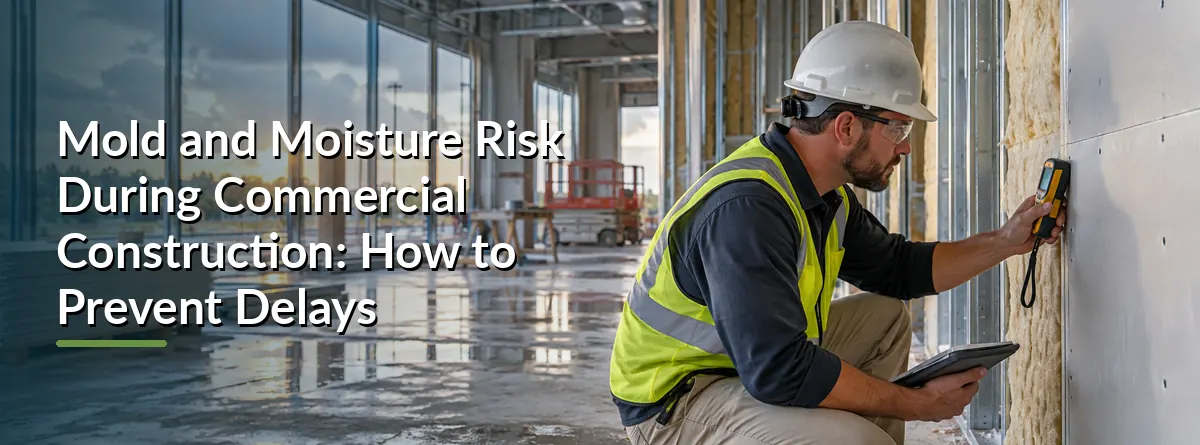
Moisture Can Become a Schedule Issue Before Anyone Sees Mold
On a commercial jobsite, water can arrive before the building is fully ready to keep it out. Rain can enter through an incomplete roof or wall assembly, stored materials can be exposed during delivery, plumbing work can leak, and temporary heating or cooling can create condensation on cold surfaces. Concrete and other newly installed materials also release moisture as they cure.
The schedule problem begins when moisture-sensitive materials are covered, finished, or turned over before conditions are understood. A wet wall cavity discovered after drywall, millwork, flooring, or ceiling systems are installed can create rework far beyond the existing wet area. For contractors and owners, moisture control is therefore a project-planning issue as much as a building-condition issue.
Where Construction Moisture Enters the Schedule
Most moisture problems are easier to correct while the building is open and the affected materials remain accessible. Once finishes are in place, the same problem can require selective demolition, additional drying time, environmental evaluation, replacement materials, and coordination among several trades.
- Rain entering before roofing, flashing, windows, or exterior walls are complete
- Drywall, insulation, wood products, ceiling tile, or other porous materials stored where they can become wet
- Plumbing leaks, equipment leaks, or water released during testing and commissioning
- Condensation caused by humid air contacting cooler surfaces
- Wet materials enclosed before drying has been verified
- Water intrusion that is repaired without checking adjacent or concealed materials
EPA moisture-control guidance for building construction emphasizes planning, scheduling, sequencing, material protection, and verification. That approach is especially useful on commercial projects where one moisture event can affect several subcontractors and later phases of work.
Control Moisture Before Materials Are Enclosed
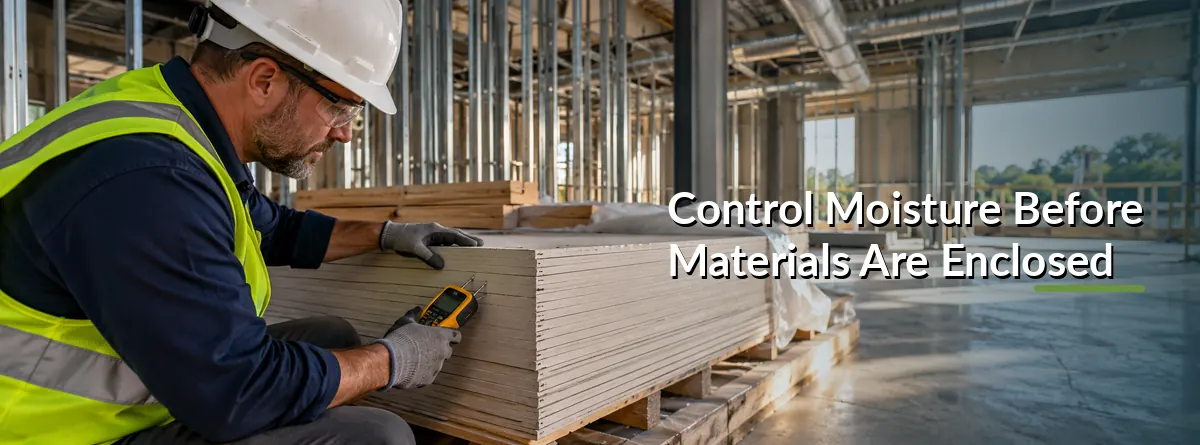
The most effective time to manage moisture is before a wall, ceiling, floor, or chase is closed. Materials that are intended to stay dry should be protected during delivery and storage, and visibly wet or suspect materials should not simply disappear behind the next layer of construction.
A practical moisture-control plan should identify who is responsible for protecting stored materials, who responds when water enters the building, how affected areas are isolated from ongoing work, and what evidence is needed before construction continues. On larger jobs, that documentation can keep a small water event from becoming a dispute between trades later.
Compliance Centre provides environmental and safety services for construction projects and can also evaluate building conditions when moisture or mold concerns appear during the work.
A Short Drying Hold Can Prevent Much Larger Rework
Keeping the project moving does not always mean covering an area as quickly as possible. When materials are wet, the faster decision may be to stop that specific portion of the work long enough to find the source, remove standing water, establish drying, and confirm that the affected assembly is ready for the next step.
That decision should be based on the material, the extent of wetting, manufacturer or project requirements, and actual site conditions. Visual appearance alone may not show what is happening inside porous materials or concealed spaces. When conditions are uncertain, a professional mold and moisture inspection can help define the affected area and identify conditions that need attention before finishes continue.
Document Drying Before the Project Moves Forward
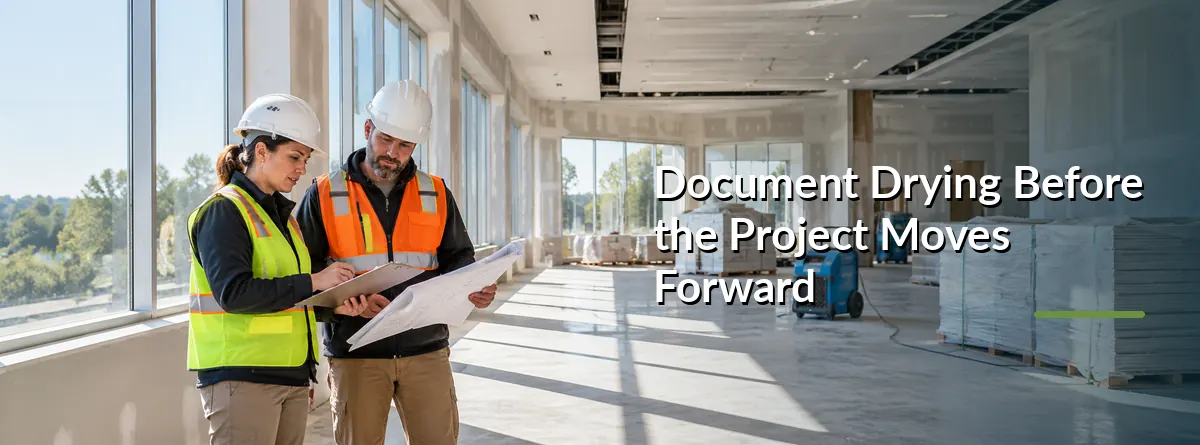
Documentation matters because construction moves quickly. The person who saw the first leak may not be the person who later installs flooring, closes a wall, or signs off on turnover. Photographs, moisture readings, repair notes, equipment logs, and records of affected locations create a clear history of what happened and what was done.
Those records can also help the project team decide whether additional evaluation is appropriate. Recurring water intrusion, unexplained dampness, musty odors, visible growth, or moisture that extends into concealed assemblies deserves more attention than a simple surface wipe-down. Where mold is confirmed, or conditions remain unresolved, the next step may involve mold control and prevention planning rather than continuing work around the condition.
When an Environmental Evaluation Makes Sense
Not every construction moisture event becomes a mold problem, and not every wet material requires the same response. An environmental evaluation becomes more useful when the source is unclear, the wetting is repeated, materials have been damp for an uncertain period, the affected area crosses several building assemblies, or there is disagreement about whether an area is ready to close.
For South Carolina commercial projects, warm and humid weather can add another variable because outside air, temporary conditioning, and cool interior surfaces may create condensation even when no plumbing or roof leak is obvious. The goal is not to slow construction unnecessarily. It is to identify the moisture pathway early enough that the project can make a defensible decision before additional work hides the evidence.
Keep Moisture Decisions Ahead of the Next Trade
A useful moisture plan is tied to the construction schedule, not kept separate from it. Protect materials, inspect after significant water events, correct the source, verify drying when conditions warrant it, and keep a record before the next trade covers the area. Those steps reduce the chance of finding a moisture concern only after expensive finishes are in place.
If a commercial project has recurring moisture, suspected mold, or an area that is difficult to evaluate before enclosure, contact Compliance Centre to discuss the site conditions and the type of assessment that may be appropriate.