Professional Mold Remediation in South Carolina: What to Expect
Professional Remediation Starts With Understanding the Problem
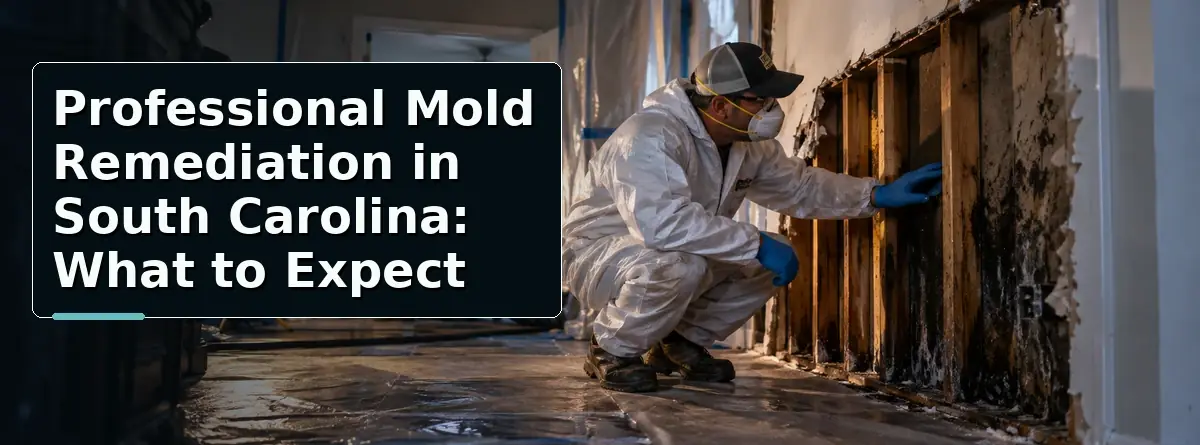
When a South Carolina property has visible mold, a musty odor, or water damage, professional remediation begins with investigation, not simply spraying the most noticeable spot. The goal is to understand what happened, where moisture remains, which materials may be affected, and how the work can be completed without spreading contamination into unaffected areas.
EPA guidance identifies moisture control as the key to mold control. Roof and plumbing leaks, storm water, crawl-space dampness, condensation, and HVAC drainage problems can all create conditions that support growth. Removing visible material without correcting the source can allow the problem to return.
Assessment Comes Before Cleanup
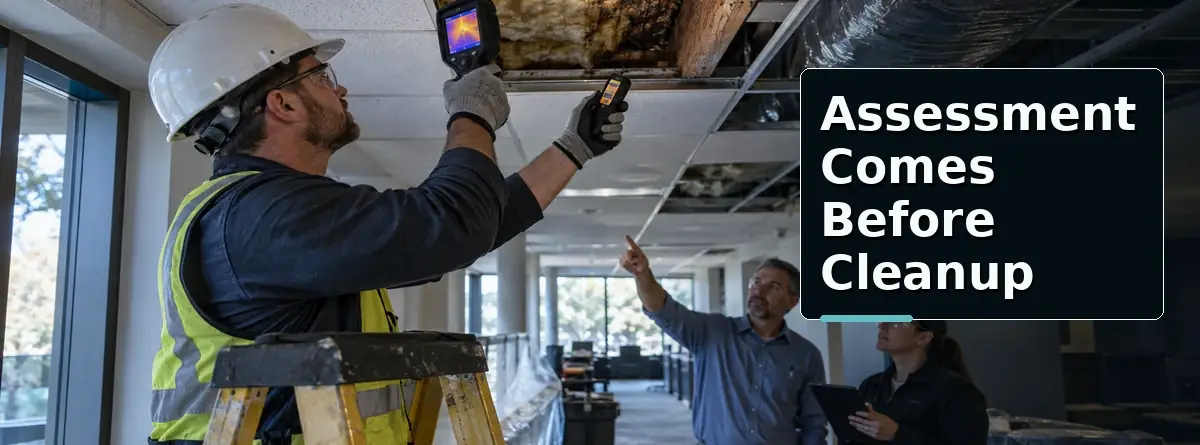
Before cleanup begins, a remediation professional reviews the property and its history. The assessment may include a visual walkthrough, moisture readings, thermal imaging, review of past leaks or repairs, and a closer look at walls, ceilings, flooring, insulation, HVAC areas, and other locations where moisture may be hidden.
The purpose is not to label every dark spot or promise a diagnosis. It is to define the building condition and determine the next practical step. Depending on what is found, that may include:
- Identifying and documenting the moisture source
- Defining the affected area and materials
- Determining whether containment is needed
- Recommending cleaning, removal, or additional evaluation
- Creating a scope that property owners and contractors can understand
Testing is not automatically necessary for every visible mold condition. EPA notes that there are no federal mold-spore limits and that sampling should be designed and interpreted by experienced professionals when it is appropriate. If hidden growth is suspected, the source is uncertain, or documentation is needed, mold testing may be considered. A professional mold inspection can help define the condition before work begins.
Containment Keeps the Work Controlled
Once the scope is understood, the work plan addresses how to separate affected and unaffected areas. Depending on the property, workers may use plastic containment, controlled entry procedures, negative air pressure, floor protection, and HEPA-filtered air equipment.
The right controls depend on the size and location of the affected area, the materials involved, the building layout, and whether the property remains occupied. These measures help manage dust and particles as materials are opened, cleaned, or removed. They also give property owners and occupants a clearer understanding of where work is occurring and how nearby areas are being protected.
Cleaning and Removal Depend on the Materials
Remediation is not the same as making a stain disappear. Hard, cleanable surfaces may be cleaned using a method appropriate for the material. Porous materials such as some drywall, insulation, ceiling tile, carpet padding, and unfinished wood can hold moisture and contamination below the surface. Depending on the condition, controlled removal may be more appropriate.
A professional scope should explain which materials can remain, which require removal, how debris will be handled, and which repairs should wait until the area is dry. People should avoid casually disturbing suspected hidden mold, especially behind walls or above ceilings. EPA recommends consulting experienced professionals when a problem is extensive, follows significant water damage, involves HVAC, or may be hidden.
Moisture Correction Is Part of the Solution
Correcting the moisture source is one of the most important parts of the project. Depending on the cause, the next step may involve repairing a roof or plumbing leak, correcting HVAC condensation, improving drainage or ventilation, drying building materials, or managing indoor humidity.
Some repairs may require coordination with a plumber, roofer, HVAC contractor, builder, or property manager. Compliance Centre’s mold remediation services are based on actual site conditions, affected materials, occupancy, and project requirements.
The Final Review Confirms the Next Step
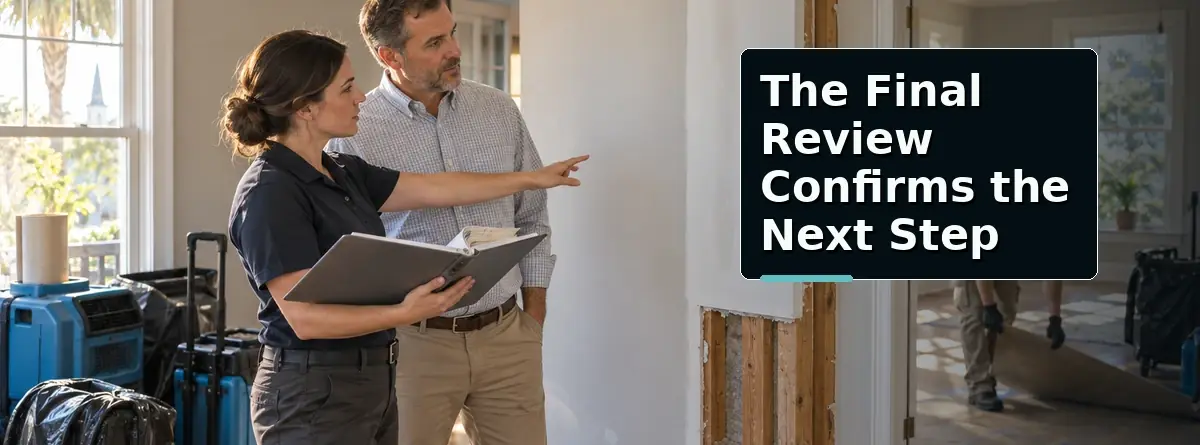
After cleaning or removal, the property should be reviewed against the project scope. A final review may consider whether the moisture source was addressed, whether visible mold and musty odors remain, whether affected materials were handled as planned, and whether the space is ready for repairs or the next occupancy decision.
Documentation can help owners, managers, contractors, and occupants understand what was observed, what work was completed, and what remains to be done.
When to Call a Professional
Professional guidance is especially useful when growth returns after cleaning, a musty odor has no clear source, water has entered porous materials, the affected area is extensive, HVAC may be involved, contamination followed sewage or flooding, or the building needs a controlled remediation plan.
If you are unsure whether the next step is an inspection, testing, or remediation, contact Compliance Centre with a description of the property condition.
General information: This article is educational and is not medical advice. Mold exposure can affect people differently; anyone with health concerns should speak with a qualified health professional.