Asbestos, Mold & Air Quality Before Buying a Home
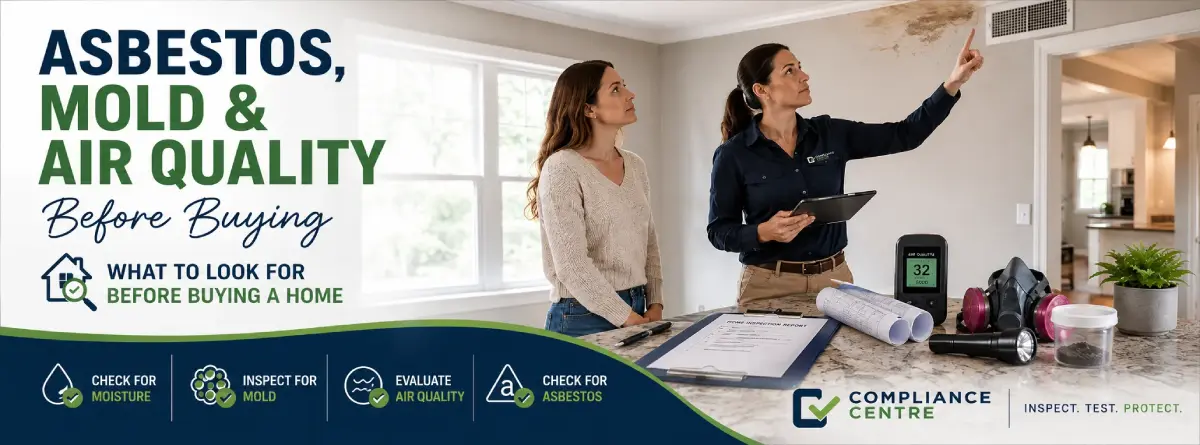
Asbestos, Mold & Air Quality Before Buying
Quick Answer: Before buying a home, look for moisture damage, musty odors, visible staining, older building materials, poor ventilation, and signs of past leaks. If asbestos, mold, or indoor air concerns are suspected, professional inspection or testing can help you understand the issue before closing, renovating, or disturbing materials.
Buying a home can move fast, especially when the property looks good on the surface. The problem is that asbestos, mold, and indoor air quality concerns are not always obvious during a standard walkthrough. Older flooring, ceiling materials, pipe insulation, crawlspace moisture, HVAC issues, and hidden water damage can all affect the condition of the home and the decisions you make before closing. If the home has older materials that may be disturbed during repairs or remodeling, asbestos inspection services can help identify concerns before work begins.
Start with Moisture and Visible Warning Signs
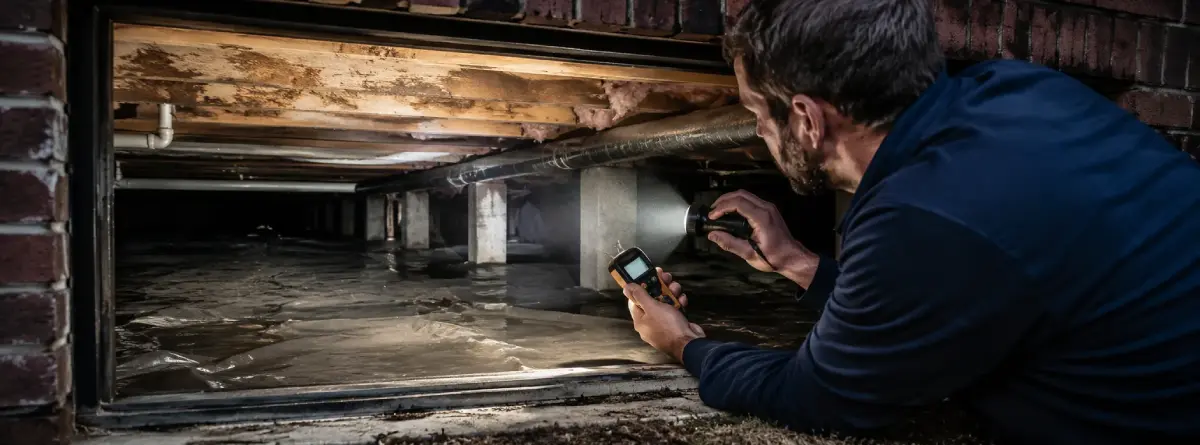
Moisture is one of the first things a buyer should pay attention to. Look for stained ceilings, soft flooring, watermarks around windows, musty odors, damp crawl spaces, poor drainage, and discoloration near vents or baseboards. A home does not need to look abandoned to have a moisture problem. In South Carolina, humidity, stormwater, roof leaks, plumbing leaks, and crawlspace conditions can create problems that are easy to miss during a quick showing. When signs point to a possible mold issue, a professional mold inspection can help determine whether the concern is cosmetic, moisture-related, or something that needs further evaluation.
Know Where Asbestos May Be Hiding
Asbestos concerns are most common in older homes, but the risk depends on the material, condition, and whether it may be disturbed. Possible asbestos-containing materials can include certain older floor tiles, mastic, pipe insulation, ceiling texture, duct materials, siding, roofing materials, and other building products. The key point for buyers is simple: do not scrape, drill, sand, remove, or disturb suspicious materials just to “check.” If the home needs renovation, demolition, flooring replacement, ceiling work, or mechanical updates, an asbestos inspection should be conducted before the project begins.
Indoor Air Quality Is More Than One Issue
Indoor air quality is not just about one smell or one test. A home’s air can be affected by moisture, mold, HVAC condition, ventilation, attached garages, crawlspaces, combustion appliances, dust, building materials, and past renovations. During a walkthrough, pay attention to heavy odors, visible dust around vents, condensation, closed-off rooms, stained supply registers, and areas where air feels stale or damp. For buyers who need broader guidance, Compliance Center’s environmental health and safety services can help connect the visible clues with the right type of inspection or testing.
Why This Matters
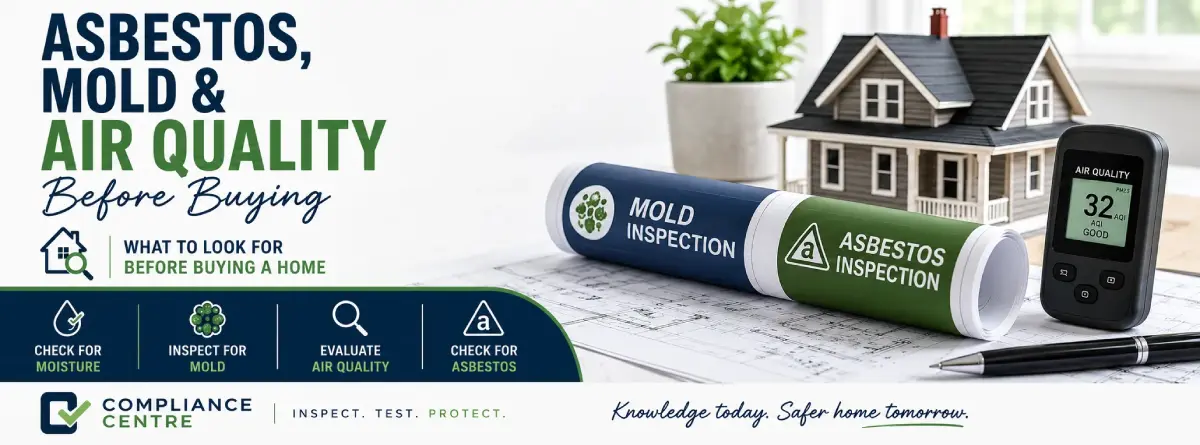
Environmental concerns can affect more than comfort. They can change repair plans, renovation timelines, negotiation decisions, insurance questions, contractor scope, and the true cost of owning the home. Knowing what is present before closing gives a buyer a stronger position and helps prevent the mistake of disturbing a material or starting repairs without the right information.
Common Mistakes
- Assuming a home is fine because it looks freshly painted or recently updated.
- Ignoring musty odors, crawlspace moisture, ceiling stains, or HVAC-related discoloration.
- Disturbing older flooring, ceiling texture, insulation, or pipe wrap before checking for asbestos concerns.
- Relying only on air fresheners, paint, or cleaning to cover signs of a possible moisture issue.
- Waiting until after closing or after renovation begins to ask about inspection or testing.
Best Practices
- Ask about the home’s age, renovation history, roof leaks, plumbing leaks, crawlspace repairs, and previous mold or water damage.
- Look closely at attics, crawlspaces, utility rooms, bathrooms, laundry areas, HVAC closets, and basement or slab-adjacent spaces.
- Request professional inspection or testing when suspicious materials, visible mold, musty odors, or concealed moisture are present.
- Get documentation before making major repair, renovation, or demolition decisions.
- Use inspection results to plan repairs correctly instead of guessing.
Local Relevance
In Columbia, Orangeburg, Lexington, and other South Carolina communities, homebuyers often deal with a mix of older homes, humid weather, crawlspace construction, stormwater issues, and renovation-heavy properties. Those conditions make moisture checks especially important. Older homes may also contain materials that should be evaluated before remodeling. A buyer does not need to panic, but they should know when a concern deserves professional attention.
When to Contact a Professional
Contact a professional before closing when there are musty odors, visible staining, suspected mold growth, damp crawlspaces, unexplained respiratory irritation in the home, or older materials that may be disturbed during renovation. If there is uncertainty, mold testing services can provide additional information instead of relying on guesswork.
Final Thoughts
A home does not have to be perfect to be a good purchase, but buyers should know what they are walking into. Asbestos, mold, and indoor air quality concerns are easier to manage when they are identified early, documented properly, and handled before materials are disturbed or moisture problems spread. If you are buying a home in South Carolina and need help understanding possible environmental concerns, contact Compliance Center to schedule an inspection, request testing, or ask what type of evaluation makes sense before closing.
Frequently Asked Questions
Should I check for mold before buying a home?
Yes, especially if the home has musty odors, past leaks, crawlspace moisture, visible staining, or signs of poor ventilation. A mold inspection can help identify whether the concern needs further testing or repair planning.
Can I tell if a material contains asbestos by looking at it?
No. Suspected asbestos-containing materials cannot be confirmed by appearance alone. If older materials are damaged or may be disturbed during renovation, they should be evaluated by a qualified professional.
What indoor air quality warning signs should buyers notice?
Watch for musty smells, heavy dust around vents, condensation, stained ceilings, damp crawlspaces, poor airflow, strong chemical odors, and signs of previous water damage.
Is mold testing always needed before buying a house?
Not always. Testing may be helpful when there is uncertainty, hidden moisture, conflicting information, or a need for documentation before closing, repair negotiations, or remediation planning.
When should I call Compliance Centre before closing?
Call before closing if the home has suspected asbestos materials, visible mold, moisture concerns, musty odors, planned renovations, or indoor air quality questions that need professional inspection or testing.