
Why You Shouldn't Use Bleach for Black Mold Removal
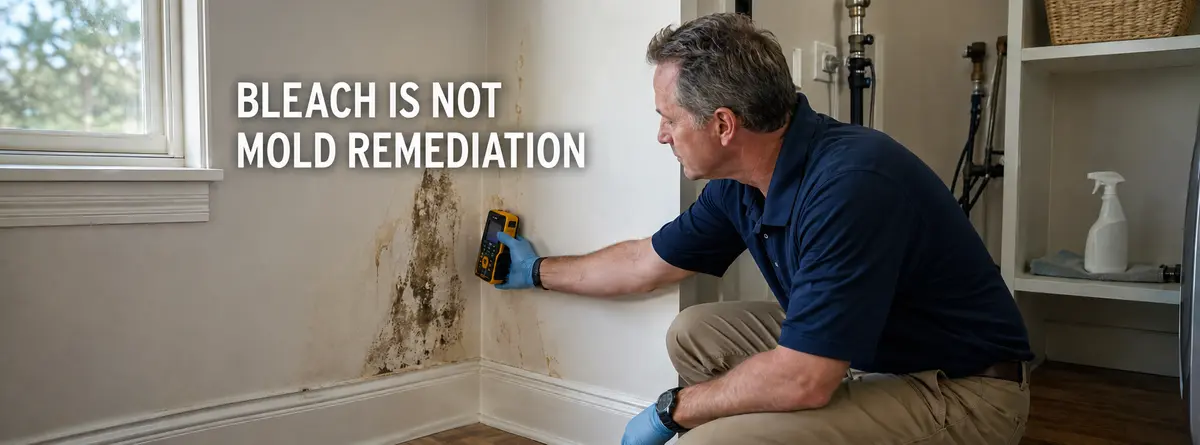
Why Bleach Is Not the Answer for Black Mold
Quick Answer: Bleach may lighten a dark mold stain or affect growth on some hard, nonporous surfaces, but it is not a complete black mold removal plan. It does not repair the moisture source, and surface treatment may leave contamination inside porous materials such as drywall, ceiling tile, insulation, carpet, or unfinished wood.
Finding dark growth on a wall often creates an understandable urge to reach for the strongest cleaner in the house. The color, however, does not tell you how far the problem extends or what caused it. A professional mold inspection can help identify moisture, hidden damage, and the appropriate scope of cleanup before chemicals or demolition complicate the situation.
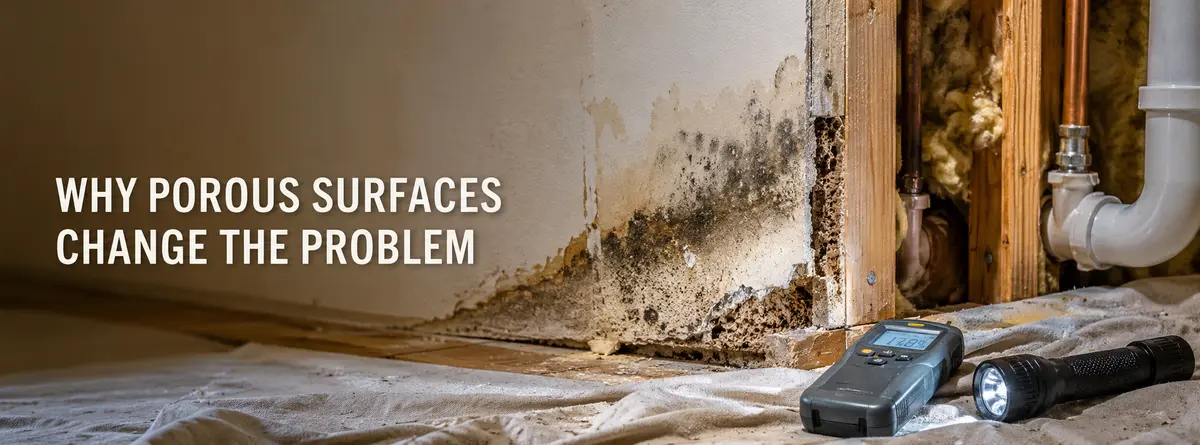
Why a Lighter Stain Does Not Mean the Mold Is Gone
Bleach can change the appearance of surface growth, which may make an area look cleaner. Appearance alone is not proof that contaminated material has been cleaned or removed. The U.S. Environmental Protection Agency explains that chlorine bleach is not recommended as a routine mold-cleanup practice and that dead mold can still cause reactions, so simply killing growth is not the same as removing it. The EPA's guidance on bleach and mold cleanup also stresses that the underlying moisture problem must be resolved.
Porous Materials Change the Cleanup Strategy
Drywall, paper backing, ceiling tile, carpet padding, and some wood products contain pores and small spaces that can hold moisture and mold below the visible surface. Wiping or spraying the face of the material may not reach that hidden growth. Depending on the extent and condition of the material, proper remediation may require controlled removal rather than repeated surface treatment.
The Moisture Source Comes First
Mold growth is a moisture problem before it is a cleaning problem. A leaking supply line, roof defect, condensation, overflowing HVAC drain, damp crawlspace, or high indoor humidity can keep feeding growth after a wall looks clean. Effective mold control and prevention begins by locating the water source, correcting it, and confirming that affected materials can dry.
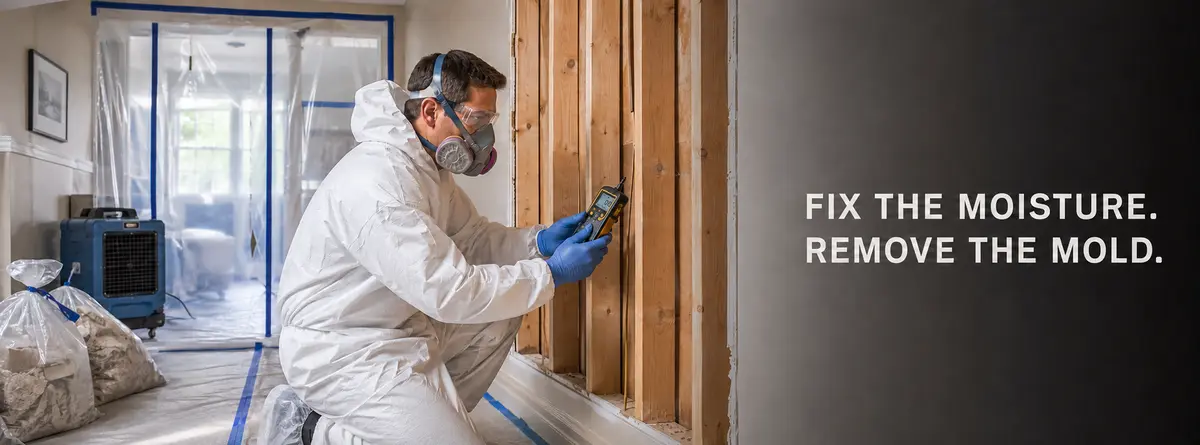
Why This Matters
Mold remediation is not about making a stain disappear. It is about correcting the conditions that support growth, removing contamination that cannot be adequately cleaned, protecting unaffected areas during the work, and leaving the structure dry enough to reduce the chance of recurrence.
Common Mistakes
- Assuming dark color proves a particular mold species or reveals how serious the problem is.
- Spraying bleach on drywall or another porous material and treating the color change as successful removal.
- Cleaning the visible spot without investigating plumbing, roofing, condensation, HVAC drainage, or humidity.
- Mixing bleach with ammonia, acids, or other cleaners, which can create dangerous fumes.
- Painting or caulking over staining before the contaminated material is addressed and fully dried.
Best Practices
- Stop the leak or moisture source and document where water traveled.
- Limit disturbance of suspect materials until the affected area and cleanup scope are understood.
- Use methods appropriate to the surface; hard, cleanable materials and contaminated porous materials may require different treatment.
- Keep remediation work from spreading dust and spores into unaffected rooms.
- Verify that remaining building materials are dry before repairs and finishes are installed.
Local Relevance
South Carolina homes routinely face humid outdoor air, heavy rain, air-conditioning condensation, crawlspace moisture, and plumbing leaks. In Columbia, Orangeburg, and surrounding communities, a small stain may be the visible edge of a larger damp area. Quick attention to the water source matters more than repeatedly bleaching the same spot.
When to Contact a Professional
Professional help is appropriate when growth returns after cleaning, a musty odor has no obvious source, water entered a wall or ceiling cavity, porous materials are affected, the area is extensive, or occupants have conditions that make exposure a greater concern. Compliance Center can help determine whether professional mold remediation is the right next step and help define the work before repairs begin.
Final Thoughts
Bleach is not a substitute for finding moisture, understanding the affected materials, and physically removing contamination when needed. If you are unsure what is behind a dark stain or why it keeps returning, contact Compliance Centre for practical guidance, inspection, or remediation planning in South Carolina.