
Moisture and Mold Problems in South Carolina Homes
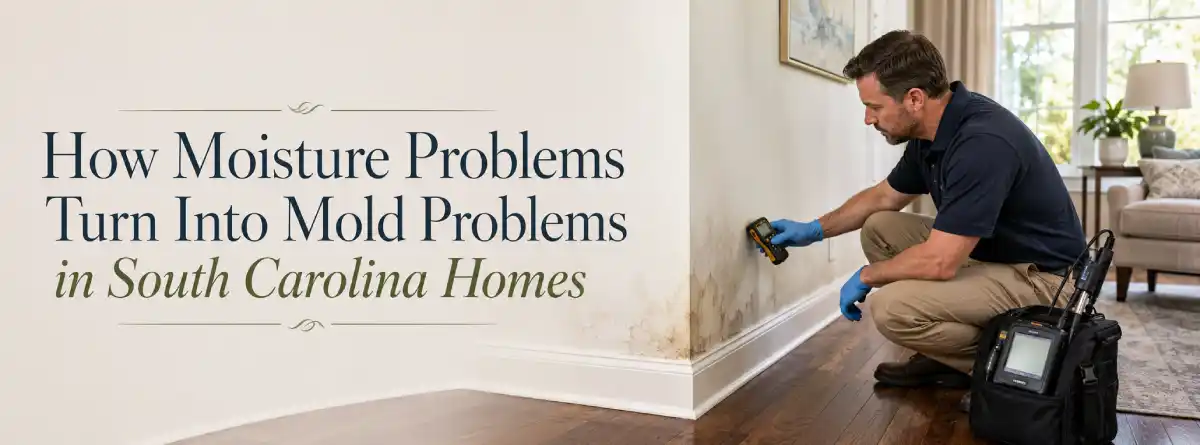
How Moisture Problems Become Mold Problems in SC Homes
Quick Answer: Moisture problems turn into mold problems when building materials stay damp long enough for mold spores present indoors to grow. In South Carolina homes, roof leaks, plumbing leaks, high indoor humidity, condensation, crawl space moisture, and poorly dried water damage are common starting points. Correcting the moisture source is essential because cleaning visible mold without fixing the water problem allows the conditions that supported growth to continue.
Mold is often treated as the first problem, but it is usually the result of an earlier moisture issue. A stained ceiling, musty room, damp crawl space, or recurring condensation may show that water is entering or failing to dry. A professional mold inspection can help identify visible concerns, likely moisture sources, and areas that may need closer evaluation before repairs begin.
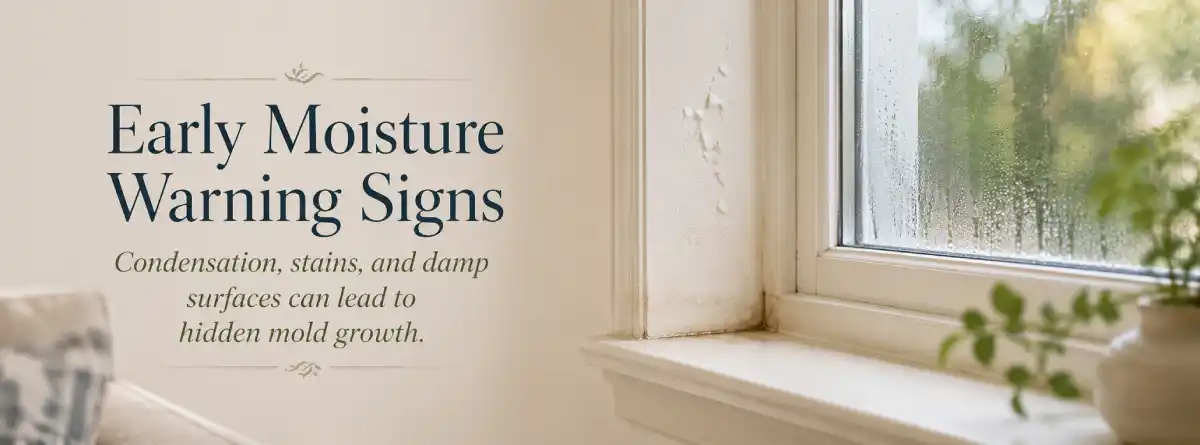
Mold Starts With Uncontrolled Moisture
Mold spores are a normal part of outdoor and indoor environments. A problem develops when moisture gives those spores a place to grow on materials such as drywall paper, wood framing, insulation facing, carpet backing, ceiling tiles, dust, and other organic debris. The visible growth may be small, while the damp area behind a wall, under flooring, or inside a cabinet is much larger.
The moisture source does not have to be dramatic. A slow pipe leak, an air-conditioning drain problem, a bathroom that stays damp, or humid air entering a crawl space can create repeated wetting. Even when surfaces appear dry during the day, recurring moisture can retain the same materials sufficiently damp to support continued growth.
Common Moisture Sources in South Carolina Homes
South Carolina's warm, humid climate can make moisture control more difficult, especially during long cooling seasons. Air leaks around windows, doors, attic penetrations, and ductwork may allow humid outdoor air to reach cooler surfaces, resulting in condensation. Crawl spaces, bathrooms, laundry rooms, kitchens, basements, and rooms with limited airflow deserve particular attention.
- Roof, flashing, window, or exterior wall leaks
- Plumbing leaks beneath sinks, behind appliances, or inside walls
- Air-conditioning drain, duct, or equipment problems
- High indoor humidity and inadequate dehumidification
- Crawl space ground moisture or humid air intrusion
- Water damage that was cleaned but not fully dried
Why the Moisture Source Can Be Hard to Find
Water does not always appear directly below the point where it entered. It can travel along framing, pipes, wiring, roof decking, or flooring before becoming visible. A stain may also temporarily dry while the leak continues under certain weather conditions or during appliance cycles. This is why simply painting over a mark or wiping a surface may hide evidence without correcting the cause.
Inspection focuses on the building conditions and the path moisture may be taking. Mold testing services may be useful when the type or extent of a concern is uncertain, when documentation is necessary, or when growth is suspected in areas that are not readily visible. Testing does not replace the need to locate and correct the moisture source.
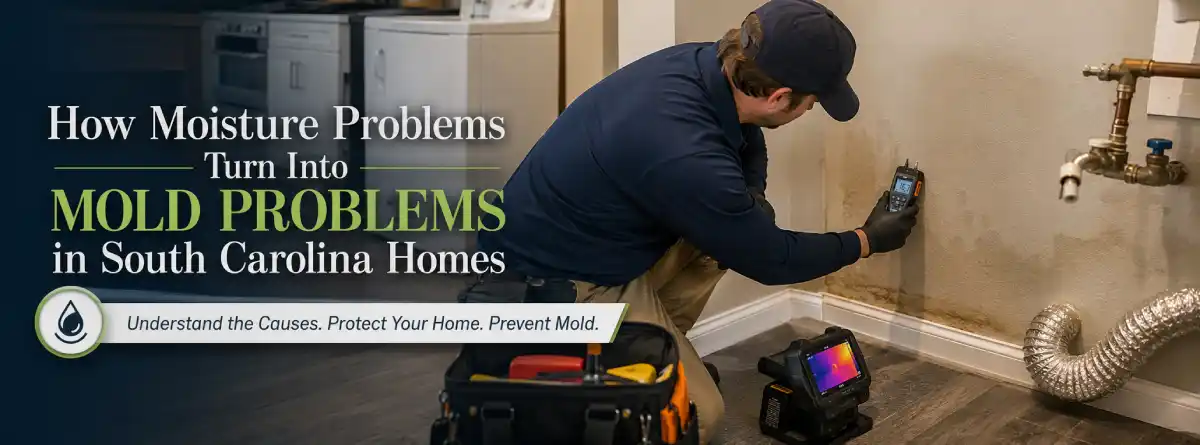
Why This Matters
A moisture problem can damage far more than the surface where a stain first appears. Repeated wetting may affect drywall, trim, flooring, insulation, cabinets, framing, and personal belongings. Finding the cause early can limit the area that needs repair, reduce the risk of recurring growth, and help homeowners make decisions based on the property's condition rather than guesswork.
Common Mistakes
- Cleaning or painting over visible mold without repairing the leak or humidity problem
- Assuming a dry surface means the material behind it is also dry
- Running fans across suspected mold growth without understanding the affected area
- Ignoring musty odors because no visible growth can be seen
- Replacing damaged materials before documenting and correcting the moisture source
Best Practices
- Repair roof, plumbing, drainage, HVAC, and exterior water-entry problems quickly
- Use bathroom and kitchen exhaust systems that vent moisture outdoors
- Keep gutters, downspouts, grading, and foundation drainage working properly
- Watch for condensation, recurring stains, peeling paint, swelling materials, and musty odors
- Document water damage and confirm affected materials are dry before closing walls or completing repairs
- Use professional inspection or testing when the source, extent, or appropriate response is unclear
Inspection, Testing, and Remediation Are Different Steps
An inspection evaluates the property for visible growth, moisture patterns, building conditions, and possible hidden concerns. Testing collects samples when additional information is needed. Remediation addresses affected materials using controlled procedures while the underlying moisture source is corrected. Not every situation requires every service, but understanding the differences helps prevent incomplete repairs.
When growth is extensive, concealed, recurring, or connected to a significant water event, a planned mold remediation process may be more appropriate than surface cleaning alone. The scope should reflect the actual conditions, affected materials, and moisture source.
Local Relevance
Homes in Columbia, Orangeburg, and other South Carolina communities face long periods of heat and humidity, heavy rain, tropical weather, and extended air-conditioning use. These conditions make moisture management especially important. Crawl spaces, older roofing systems, additions, enclosed porches, and rooms with uneven cooling may develop moisture patterns that are easy to overlook until staining, odors, or material damage appear.
When to Contact a Professional
Professional help is appropriate when mold keeps returning, the moisture source is unclear, growth may be hidden, a large area has been affected, occupants cannot safely access the area, or records are needed for a property transaction or restoration plan. It is also wise to request guidance before opening walls, removing flooring, or disturbing materials when the full condition is unknown.
Final Thoughts
Mold control begins with moisture control. The most effective response is to identify the source of the water or humidity, determine which materials were affected, correct the source, and choose inspection, testing, cleaning, removal, or remediation based on the actual conditions. Homeowners who are unsure where to begin can contact Compliance Center to discuss the property, schedule an inspection, or request advice on the next appropriate step.
Frequently Asked Questions
How does moisture turn into a mold problem?
Moisture allows mold spores already present in the environment to grow on damp building materials and household dust. The longer materials remain damp or are repeatedly exposed to moisture, the greater the chance that growth will spread.
Can mold grow behind walls without being visible?
Yes. Mold may grow behind drywall, beneath flooring, inside cabinets, around plumbing, or in other concealed areas when moisture is present. Musty odors, recurring stains, soft materials, or unexplained damage may justify a professional inspection.
Is mold testing always necessary?
No. Visible growth and an obvious moisture source may sometimes provide enough information to plan corrective work. Testing can be useful when the condition is uncertain, growth may be hidden, documentation is necessary, or the results could affect the scope of work.
Will cleaning visible mold solve the problem?
Not by itself. Cleaning may address surface growth, but the leak, condensation, humidity, or drainage problem must also be corrected. Damaged porous materials may require removal rather than surface cleaning.
When should a South Carolina homeowner request a mold inspection?