
Why DIY Mold Cleanup Can Make Some Problems Worse
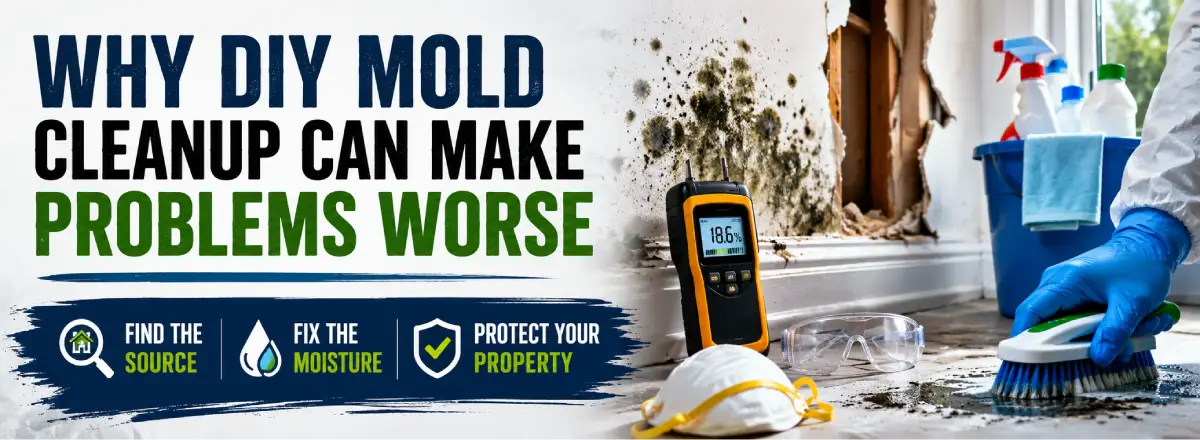
Why DIY Mold Cleanup Can Make Problems Worse
Quick Answer: DIY mold cleanup can make some problems worse when it spreads mold particles, misses the moisture source, or treats only the surface while hidden materials stay wet. Small surface spots on hard materials may be manageable in some cases, but larger, recurring, hidden, or moisture-related mold concerns usually call for professional inspection, testing, or remediation guidance.
It is easy to understand why someone tries to clean mold quickly. A dark spot appears on drywall, a musty smell shows up after a leak, or a tenant reports staining in a bathroom, and the first instinct is to scrub it, spray it, and move on. The problem is that mold cleanup is not only about what can be seen. It is also about moisture, building materials, air movement, and whether the affected area is larger than it appears. For property owners in South Carolina, a professional mold inspection can help determine whether the issue is isolated or part of a larger moisture problem.
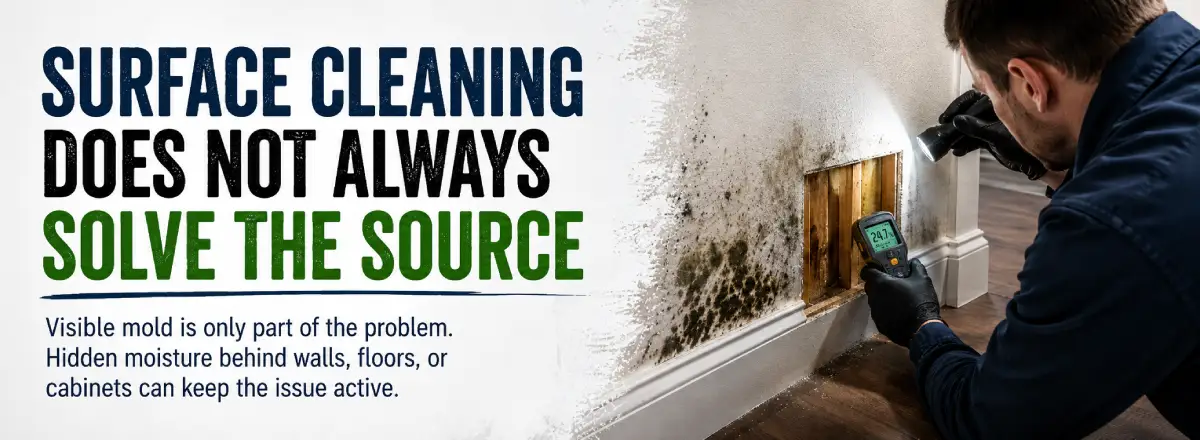
Surface Cleaning Does Not Always Solve the Source
One of the biggest problems with DIY mold cleanup is that it often focuses on the visible stain instead of the reason the mold appeared. Mold needs moisture to grow. If a roof leak, plumbing drip, crawlspace humidity issue, condensation problem, or wet building materials remain, cleaning the surface may only provide a temporary improvement. The stain may fade, but the condition that supported the growth can remain active behind drywall, under flooring, inside cabinets, or around HVAC-related moisture areas.
Scrubbing Can Spread the Problem
Dry brushing, aggressive scrubbing, or using fans before the area is understood can move mold particles into nearby rooms or onto clean surfaces. This is especially concerning when the affected material is porous, such as drywall, ceiling tile, carpet, insulation, or unfinished wood. These materials can retain moisture and support growth below the surface, making simple cleaning less reliable. When the size, source, or material is uncertain, mold testing services can help support better decisions instead of relying on guesswork.
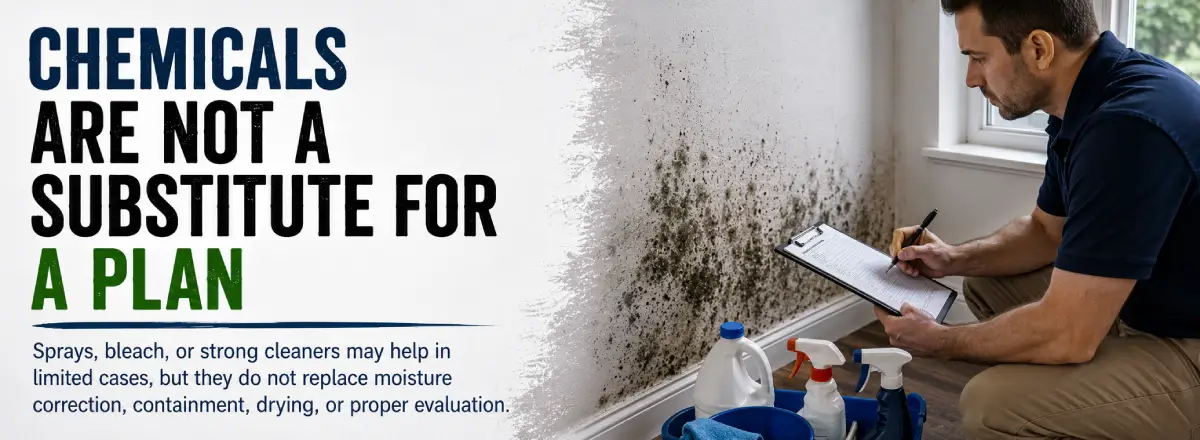
Chemicals Are Not a Substitute for a Plan
Many DIY cleanup attempts depend on sprays, bleach, or strong cleaners. Cleaning products may have a role in limited situations, but they do not replace moisture correction, material assessment, containment, drying, and documentation. Using the wrong product or mixing cleaners can also create safety concerns. A better approach starts with identifying what is wet, what materials are affected, whether the area is isolated, and whether removal or remediation is needed.
Why This Matters
Mold problems become more expensive and disruptive when the first cleanup attempt hides the evidence without solving the cause. A clean-looking wall can still be damp inside. A musty room can still have concealed moisture. A repaired surface can fail again if drying and prevention are skipped. Proper evaluation helps protect the building, provides owners with better documentation, and reduces the risk of repeated cleanup.
Common Mistakes
- Cleaning only the visible mold stain without checking for moisture behind or below the affected surface.
- Using fans too early and moving particles from the affected area into other parts of the home or building.
- Assuming porous materials can always be cleaned the same way as hard, nonporous surfaces.
- Painting or sealing over staining before the moisture source has been corrected.
- Skipping documentation when a rental property, sale, insurance concern, workplace, or commercial facility is involved.
Best Practices
- Find and correct the moisture source before treating the affected area as finished.
- Use inspection and testing when the size, source, material, or extent of the mold concern is unclear.
- Avoid disturbing suspect materials until there is a reasonable plan for containment, drying, cleanup, or removal.
- Keep records of leaks, repairs, drying work, testing, and remediation steps when the property use requires documentation.
- Use mold control and prevention practices after cleanup so the same issue does not return.
Local Relevance
South Carolina homes and buildings regularly deal with humidity, crawlspace moisture, storm-related leaks, roof issues, plumbing failures, and condensation in poorly ventilated areas. In places like Columbia and Orangeburg, a small mold concern can be tied to seasonal moisture, older construction, or building systems that need correction. Local conditions do not mean every mold issue is severe, but they do make it important to understand why the growth started before calling the job complete.
When to Contact a Professional
Contact a professional when mold returns after cleaning, the area is larger than a small surface spot, the material is porous, a musty odor remains, water damage is recent or recurring, or the property involves tenants, employees, buyers, students, patients, or customers. Compliance Center can help property owners, contractors, and facility managers evaluate the issue and determine whether mold remediation services are the right next step.
Final Thoughts
DIY mold cleanup can look simple from the outside, but the real question is not only whether the stain can be removed. The better question is whether the moisture source has been found, whether affected materials have been properly evaluated, and whether the building is ready to stay dry. If you are unsure what you are dealing with, contact Compliance Center to ask about inspection, testing, remediation guidance, or environmental consulting before the problem becomes harder to manage.
Frequently Asked Questions
Can I clean mold myself?
Small surface mold on hard, nonporous materials may be manageable in limited situations, but larger areas, recurring growth, porous materials, concealed moisture, or uncertain conditions should be evaluated by a professional.
Why does mold come back after cleaning?
Mold often comes back because the moisture source was not corrected. Leaks, humidity, condensation, wet drywall, crawlspace moisture, or poor ventilation can allow growth to return even after the surface looks clean.
Is bleach enough to remove mold?
Bleach is not a complete mold plan. Cleanup depends on the material, moisture source, size of the affected area, drying needs, and whether containment or removal is necessary. Cleaning products should never be mixed.
When should I get mold testing?
Mold testing can be helpful when the source is unclear, there is a musty odor without obvious growth, occupants or property managers need documentation, or a cleanup decision depends on knowing more about the affected area.
Who should I call for mold concerns in South Carolina?
Compliance Center serves property owners, businesses, contractors, and facility managers in South Carolina and nearby areas. For help deciding whether inspection, testing, or remediation guidance is needed, contact Compliance Center.