
What SC General Contractors Should Ask Before Disturbing Suspect
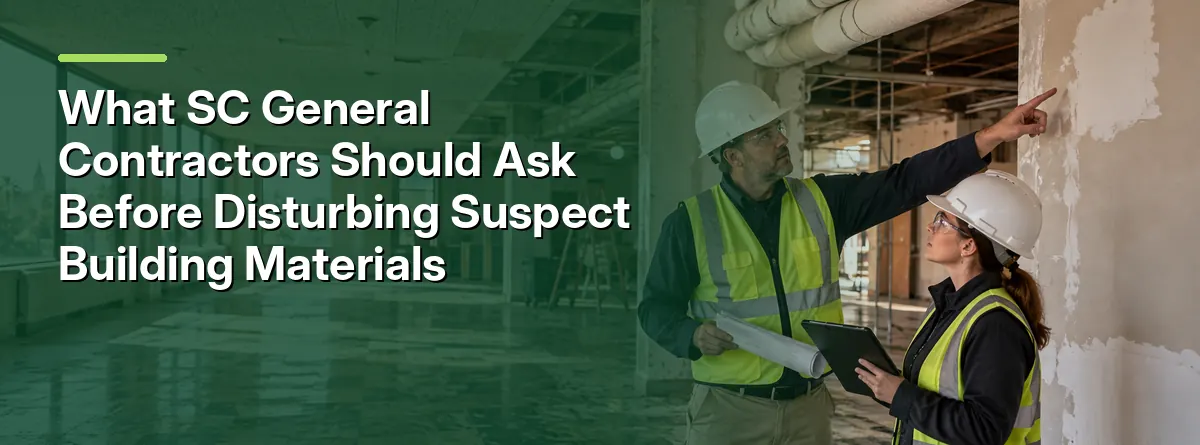
Before the Crew Starts, Confirm What the Scope Will Touch
A renovation schedule can look ready until flooring, wallboard, pipe insulation, ceiling texture, roofing, mastic, or another older material falls directly into the demolition path. For a general contractor, the useful question is not simply, “Is there asbestos?” It is, “Do we know what is in the exact materials our crews and subcontractors are about to disturb?”
For regulated facilities in South Carolina, the owner/operator must ensure that the affected facility or portion has been thoroughly inspected for asbestos before renovation or demolition. SCDES also requires a licensed asbestos building inspector or management planner to perform those inspections. That makes the inspection report a project-control document, not paperwork to chase down after work has started.
Before selective demolition, drilling, cutting, ceiling work, flooring removal, mechanical work, or other disruptive activity reaches suspect material, compare the inspection information with the real scope and sequence. Compliance Center's asbestos inspection services can help identify and document suspect building materials before construction activities reach them.
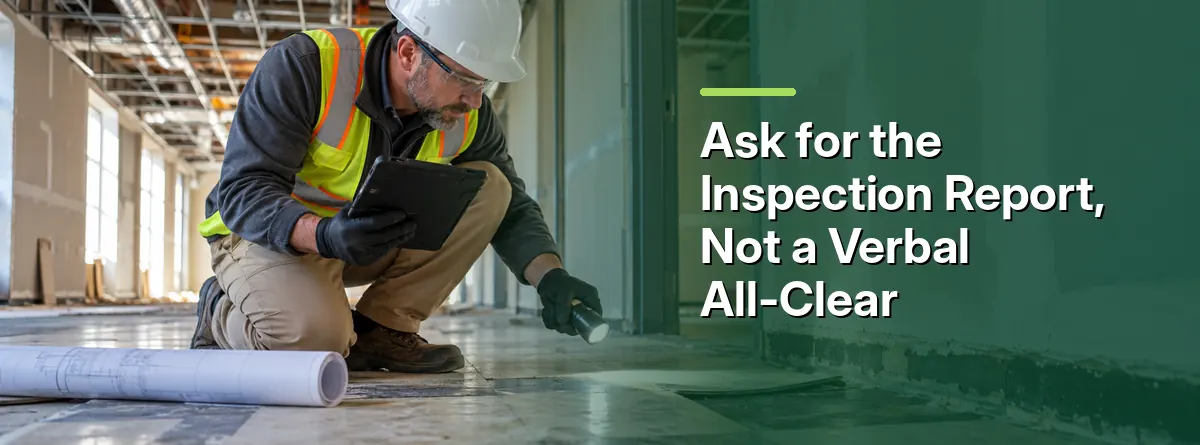
Ask for the Inspection Report, Not a Verbal All-Clear
“The building was checked years ago” is not enough to manage today's work. Ask who performed the inspection, when it was completed, which areas it covered, which materials it identified, and whether the report includes the spaces and systems your crews will actually touch. SCDES says a building inspection used for renovation or demolition must be less than three years old, or an older inspection must be confirmed and verified by a licensed asbestos building inspector or management planner.
Questions Worth Settling Before Mobilization
- Has the exact work area been inspected for asbestos?
- Who performed the inspection, and is the inspector licensed in South Carolina?
- Does the report identify the specific flooring, mastics, wall materials, ceiling materials, insulation, roofing, siding, or other components that will be disturbed?
- Are any materials identified as asbestos-containing, presumed asbestos-containing, or not sampled?
- Does the report match the current drawings and demolition scope?
- If the inspection is older than three years, has it been properly confirmed and verified?
- If asbestos is present, who is responsible for the next regulatory and project steps?
Match the Report to the Actual Work Area
Renovation scopes move. A corridor can be added, a wall can become a chase, an HVAC route can shift, or a flooring replacement can expand after demolition begins. An asbestos report that was adequate for the original scope may not answer questions about newly added work.
South Carolina's inspection requirements call for suspect asbestos-containing materials in the affected area to be identified, quantified, and assessed. Those materials can include surfacing materials, thermal system insulation, flooring, mastics, wallboard, joint compound, ceiling materials, roofing, siding, caulks, and other building components. Qualified professionals make the testing and sampling decisions. The general contractor's job is to ensure the report covers the materials the project will disturb.
This is also where broader construction environmental and safety planning matters. A change to the demolition or renovation scope should trigger another look at the environmental information supporting that part of the project.
Share Known Asbestos Information Across the Jobsite
A report sitting in an owner's file does not help a subcontractor who is about to open a ceiling. OSHA's asbestos construction standard assigns communication duties to building owners and employers. Before covered work begins, building and facility owners must determine the presence, location, and quantity of asbestos-containing material or presumed asbestos-containing material, and the standard requires information to be communicated to certain employers, including prospective employers bidding work and employers on multi-employer worksites.
For a general contractor, that means asbestos information should be part of preconstruction and pre-task coordination when the work area may contain ACM or PACM. The goal is not to turn every trade into an asbestos expert. It is to make sure no crew is sent into an area without the information needed to plan the work safely and compliantly. Compliance Center also provides OSHA compliance support for employers that need help evaluating workplace safety and compliance requirements.
Confirm Who Owns the Next Step
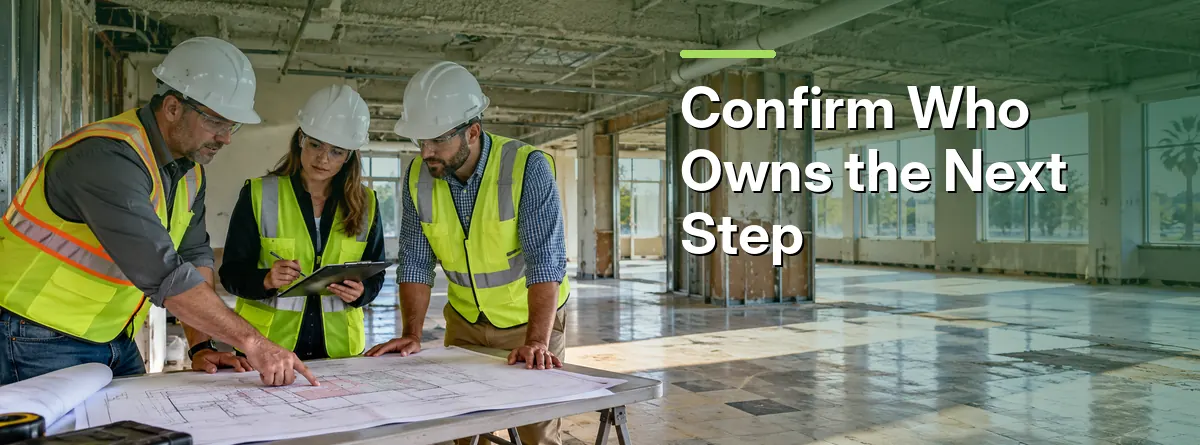
If asbestos-containing material is identified or assumed in the path of planned work, stop treating that material as routine demolition. Clarify who is responsible for abatement planning, required state notification or permitting, schedule coordination, and any clearance or closeout documentation needed before normal construction resumes.
SCDES states that the facility owner and the renovation or demolition contractor are both responsible for compliance with applicable asbestos requirements. The agency also has notification and permitting requirements for regulated renovation and demolition activities, with separate requirements for demolition even when an inspection finds no asbestos.
Put that responsibility into the schedule. A clear hold point before disturbance is far easier to manage than a shutdown after a crew has already opened the wrong material.
Build the Answer Into the Preconstruction Meeting
The most useful asbestos question is usually asked before tools are in the work area. Add the inspection report, affected materials, scope changes, responsible parties, and any required regulatory steps to the preconstruction conversation.
Compliance Center provides asbestos inspection services and environmental support for construction firms in South Carolina. If a project involves suspect building materials and the inspection status or scope is unclear, contact Compliance Centre to confirm the facts before disturbance and document the next step before work proceeds.